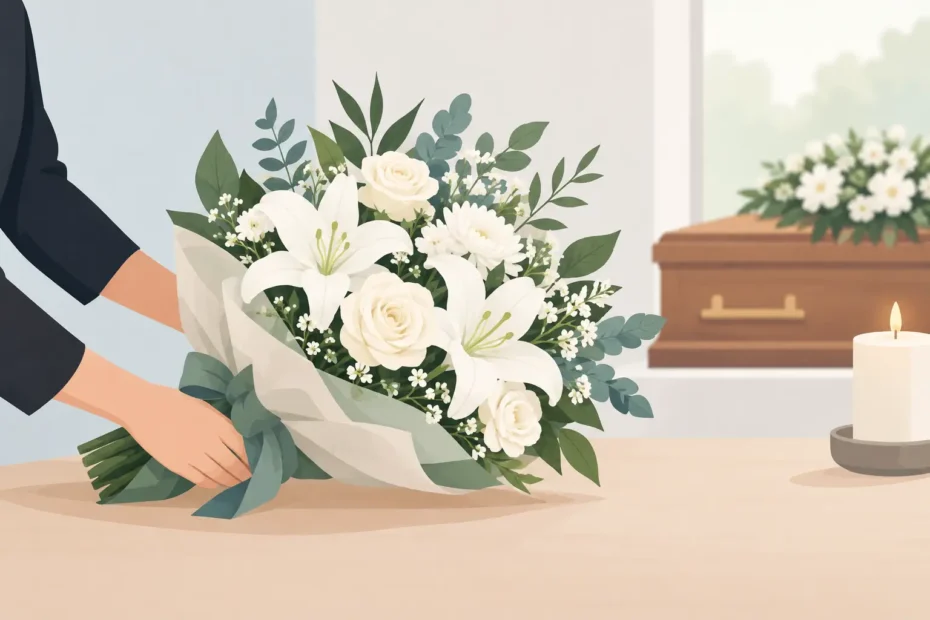
When someone is grieving, a thoughtful gesture can say what feels impossible to put into words. Knowing how to send funeral flowers helps you offer comfort without creating extra work for the family. The goal is simple: choose an appropriate arrangement, send it to the right place at the right time, and include a sincere message.
Flowers are not expected in every circumstance, and every family grieves differently. But when they are welcome, they can bring a quiet sense of support to the service, the home, or the days that follow.
How to Send Funeral Flowers Step by Step
Start by confirming the service details. Look for the funeral home name, the full name of the person who died, the date and time of the service, and any family requests. Obituaries and memorial announcements sometimes state “in lieu of flowers,” usually with a suggestion to donate to a charity or cause. In that case, honoring the request is the most thoughtful choice.
If flowers are welcome, decide where they should be delivered. A sympathy arrangement sent to the funeral home should arrive before the visitation or service. If you are sending flowers to a family member’s home, delivery can be meaningful before the funeral, but it is often especially appreciated in the week or two afterward, when visitors have gone home and daily life begins to feel very quiet.
Place your order as soon as you can, especially for a morning service, a holiday period, or a delivery in another country. Same-day delivery may be available in many areas, but it depends on the order time, the local florist’s availability, and the service schedule. For funeral deliveries, giving the florist as much notice as possible helps them prepare the arrangement with care.
When ordering through a marketplace such as eFloristApp, include complete recipient details and a phone number for the funeral home or family if available. Local florist fulfillment can be particularly helpful when you need flowers delivered in another city or country, because the arrangement is prepared close to its destination.
Choose Flowers That Fit the Relationship
You do not need to know every flower tradition to make a kind choice. A tasteful arrangement in soft whites, creams, greens, or gentle pastels is appropriate in most situations. Lilies, roses, carnations, chrysanthemums, orchids, and seasonal flowers are often used for sympathy designs because they create a calm, respectful look.
The type of arrangement matters as much as the flowers. A standing spray, wreath, or larger tribute is usually sent to the funeral home or memorial service. These arrangements are designed to be displayed near the casket, urn, or photo tribute. Because they are more formal, they are commonly sent by immediate family, close friends, coworkers, or a group.
A basket, vase arrangement, plant, or hand-tied bouquet is often better for the family home. It gives them something beautiful to keep nearby after the service. A living plant can be a gentle choice for someone who would rather not receive a traditional floral tribute, although it still helps to consider whether the recipient has the space and energy to care for it.
For a colleague, neighbor, client, or acquaintance, a modest sympathy bouquet or plant is usually enough. You do not need to make the gesture larger than your relationship. What people remember is that you showed up with kindness.
Check Religious and Cultural Preferences
Funeral customs vary widely, and a little care can prevent an unintended mistake. White flowers are commonly associated with sympathy in many traditions, but not all families share the same preferences. Some cultures welcome bright colors as a celebration of life, while others favor restrained designs.
If you know the family’s religious or cultural background, ask a close friend, relative, or funeral director if flowers are customary. In some faith traditions, flowers may not be sent to the service at all. A food gift, charitable contribution, personal note, or visit may be more appropriate.
Personal details can also guide your choice. If the person loved gardening, a flowering plant may feel meaningful. If they were known for sunflowers, wildflowers, or a favorite color, a florist can often create an arrangement that feels personal while remaining respectful. Keep customization gentle rather than overly celebratory unless the family has specifically requested a bright celebration-of-life tribute.
Write a Card Message That Feels Genuine
A funeral flower card does not need to be long. In fact, a few honest words are often more comforting than a formal paragraph. Use the person’s name if it feels natural, and sign clearly so the family knows who sent the flowers.
For a friend or family member, you might write: “Thinking of you and holding you close in my heart.” For a coworker or professional connection: “Please accept our sincere condolences during this difficult time.” If you knew the person who died: “I will always remember their warmth and generosity. With deepest sympathy.”
Avoid trying to explain grief away with phrases such as “everything happens for a reason” or “they are in a better place,” unless you know those words align with the family’s beliefs. It is kinder to acknowledge the loss simply: “I am so sorry for your loss. We are here for you.”
If the flowers are from a group, include the group name and, when space allows, the names of those contributing. This makes it easier for the family to recognize the gesture and offer thanks later, if they wish.
Make Funeral Delivery Easy for the Recipient
For a funeral home delivery, provide the deceased person’s full name exactly as it appears in the service announcement. Include the funeral home name, street address, service date, and service time. If the arrangement is intended for a particular family member, add that person’s name too.
For a home delivery, confirm the recipient’s address and phone number. Consider whether someone may be home to receive the arrangement, especially if the weather is very hot, cold, or rainy. A florist may be able to follow delivery instructions, but clear details give them the best chance of completing the delivery smoothly.
If you are ordering internationally, pay attention to the local date and time zone. A service in London, Paris, New York, Toronto, Sydney, Dubai, Singapore, or another major city may occur while you are asleep or at work. Ordering early and selecting a delivery date in the recipient’s local time helps avoid confusion. A local florist can also make suitable substitutions if a specific flower is not in season, preserving the style and sentiment of your chosen arrangement.
When Flowers May Not Be the Best Choice
Sometimes the family asks for donations instead of flowers. Sometimes a close relative may be overwhelmed by deliveries, or a faith tradition may not include floral tributes. Respecting these boundaries is part of sending sympathy with care.
You can still offer support through a condolence card, a meal, a practical errand, a donation, or a message after the funeral. For someone grieving from far away, a phone call or a simple check-in a few weeks later can mean more than any arrangement. Flowers are one expression of care, not a replacement for ongoing kindness.
If you are unsure whether to send flowers, choose the option that places the least burden on the family. A smaller home arrangement or a sincere handwritten message is often the right answer.
Grief does not follow a schedule, and your support does not have to either. Whether your flowers arrive before the service or on an ordinary day afterward, a thoughtful gesture reminds someone that they do not have to carry their loss alone.